
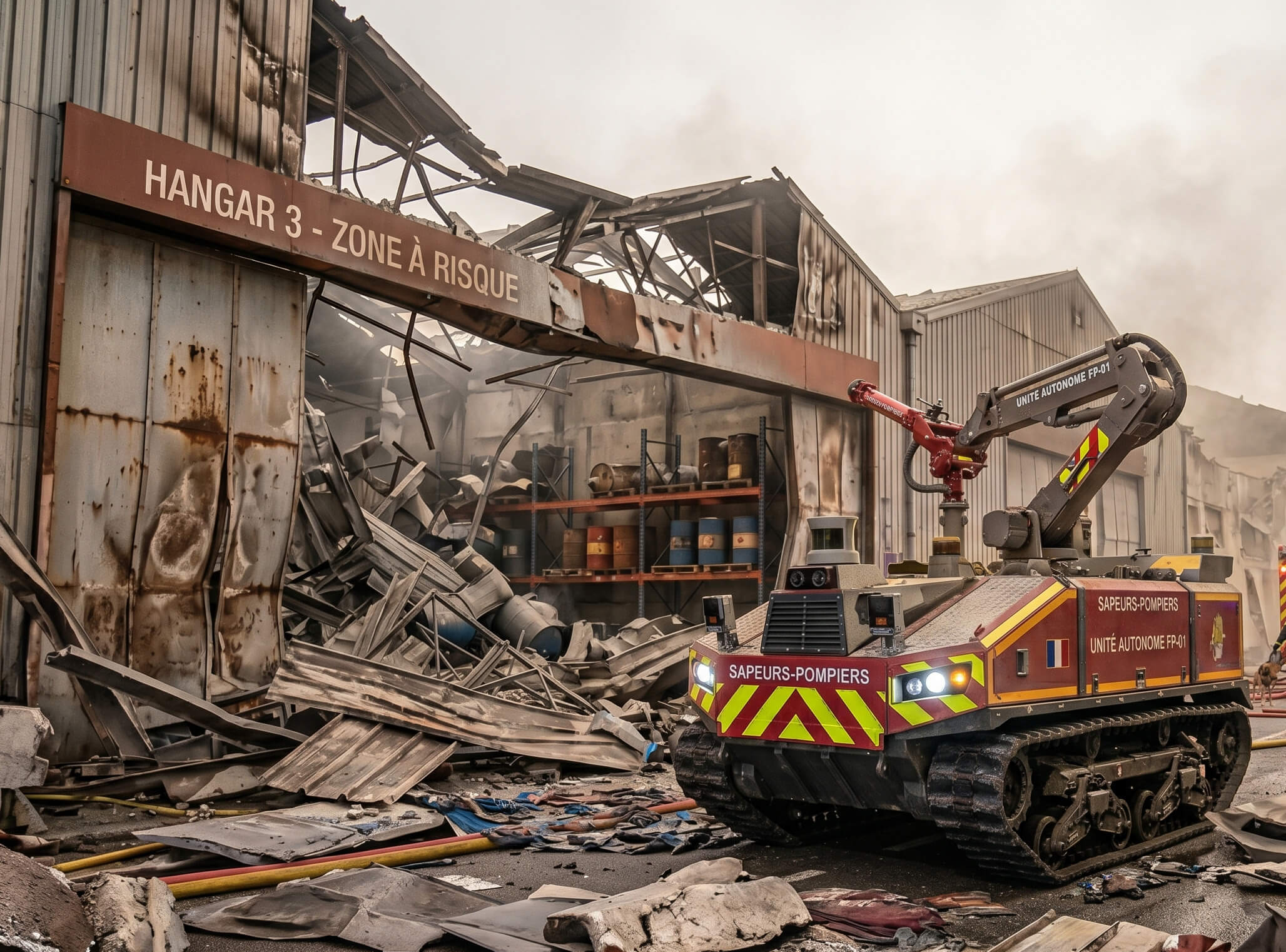
A new dimension for emergency operations
Remote operation involves controlling robotic systems, drones or autonomous vehicles from a distance via secure communication networks. This capability enables specialist operators to act from a control centre whilst maintaining a clear overview of the situation on the ground.
Reducing risks to stakeholders
One of the main advantages of remote operation is the protection of emergency response teams. During major fires, building collapses, floods or accidents involving hazardous materials, certain areas may pose high risks to emergency services.
Thanks to drones, ground-based robots or remotely operated vehicles, it is now possible to carry out reconnaissance, take environmental measurements or transport equipment without directly exposing personnel to danger.
This approach helps to safeguard personnel whilst improving the overall safety of operations.
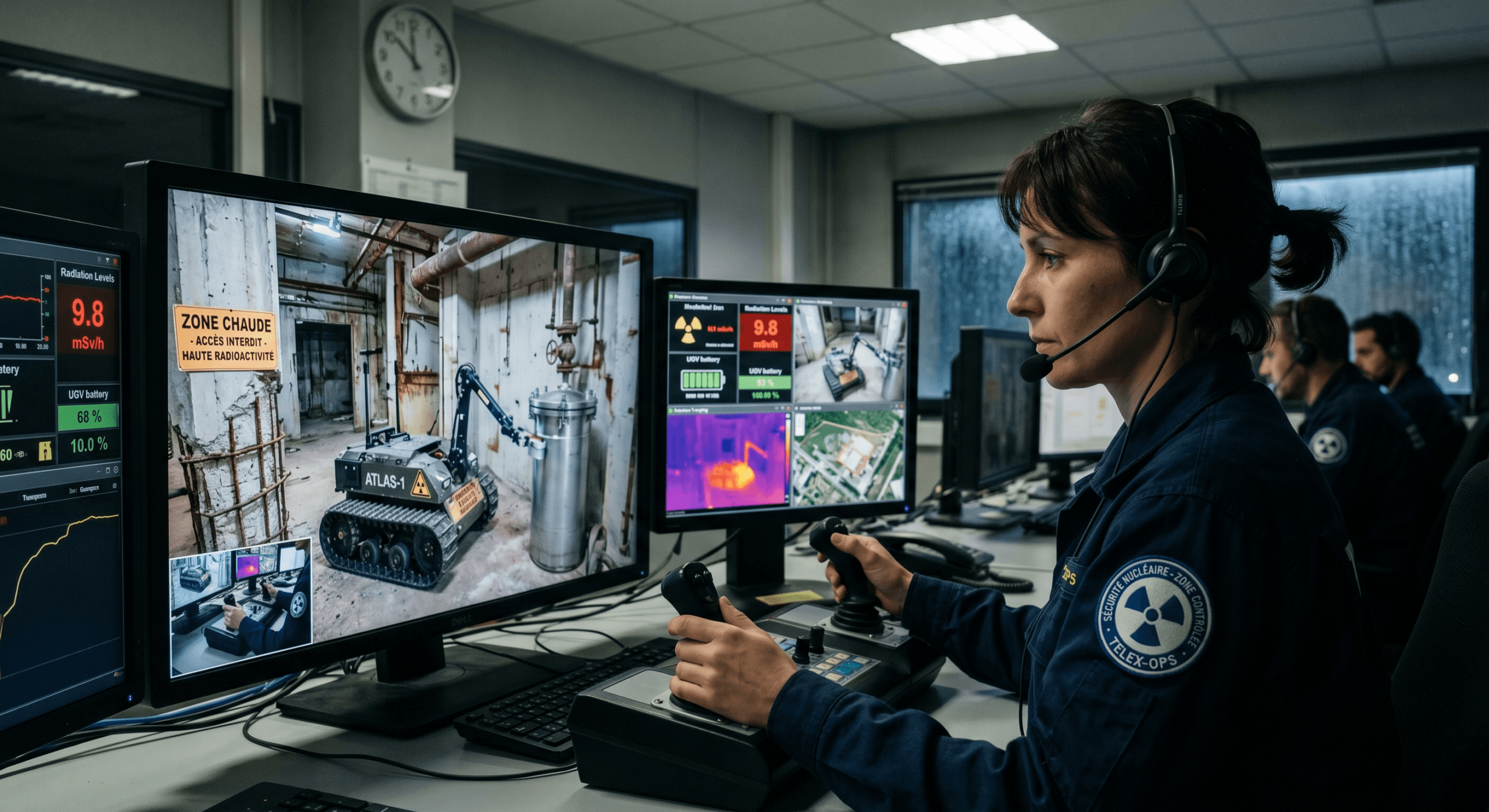
A better understanding of the situation
The quality of decision-making depends heavily on the availability of reliable and up-to-date information. Remotely operated platforms are generally equipped with high-definition cameras, thermal sensors, mapping systems and various measuring instruments.
This data is transmitted in real time to command centres, providing operational managers with a more comprehensive view of the situation. Decisions can therefore be made more quickly and with greater accuracy.
A wide range of applications for civil protection
Remote operation has numerous applications in the field of civil protection:
- Monitoring and assessing forest fires.
- Inspecting buildings damaged following a disaster.
- Searching for victims in areas that are difficult to access.
- Detection of hazardous substances or chemical leaks.
- Logistical support during rescue operations.
- Risk management during major incidents.
The combined use of aerial drones and ground-based robots, in particular, enables extensive and complementary operational coverage.
Complementary networks for borderless remote operation
In this respect, efa stands out with a solution offering very low latency – around 65 milliseconds – even over long distances.
Towards enhanced civil protection
Against a backdrop of crises becoming more complex and frequent, remote operation represents a major step towards a civil protection system that is more resilient, more connected and better prepared for the challenges of the future.